Notes for Visual-Session Practitioners

Read about introducing the screen, guiding a conversation and choosing equipment for your session format.

The First Five Minutes of a Visual Aura Session
2025-01-21

The First Five Minutes of a Visual Aura Session

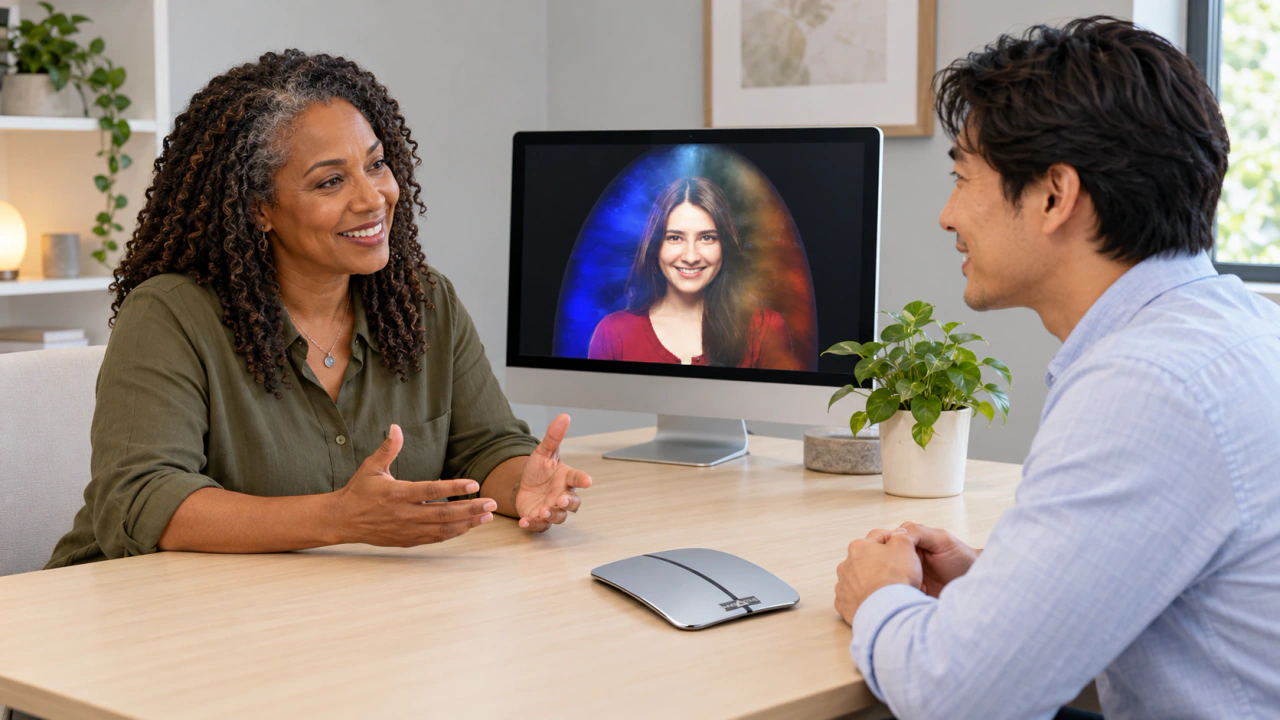
In aura traditions, color can provide a starting point for reflection and conversation. A visual aura session brings that interest into a shared setting, where a practitioner and guest look at imagery together. Before discussing any colors, however, there is a simpler task: welcome the person in front of you. The first five minutes establish the language, pace and practical shape of the meeting. A clear introduction gives the guest room to participate without needing to arrive with specialist vocabulary or an interpretation already in mind. ## Prepare a Welcome, Not a Speech Before the guest arrives, decide how you will introduce yourself and describe the session in two or three ordinary sentences. Say what will happen first, what you will look at together and when there will be time for questions. Keep the introduction specific to the appointment you actually offer. A practitioner might say: 'We will start with a brief conversation, then look at the visual display together. I will explain the steps as we go, and you can ask questions at any point.' That is enough to open a conversation. A long history of aura traditions can wait until a guest expresses interest. ## Begin With the Person Greet the guest by the name they prefer and introduce your own role. Show them where to put their belongings and where the conversation will take place. These small details make the appointment easier to follow, particularly in a busy practice or an unfamiliar venue. Ask one open question: 'What brought you to this session today?' Listen for the kind of experience they are expecting. A first-time visitor may be curious about the equipment. Someone familiar with aura traditions may want to explore color symbolism. Another guest may simply be joining a friend. Each answer suggests a useful starting point without requiring a personal assessment. ## Agree on Language and Pace For an international audience, a shared language should be a conversation, not an assumption. Ask which language the guest prefers for the session and whether they would like you to speak more slowly or explain particular terms. Describe your own language availability accurately when the appointment is booked and again if clarification is needed. If you use words such as 'aura,' 'symbolism' or 'reflection,' offer a short everyday explanation. Invite the guest to use their own words in response. If another person is helping with communication, agree on that person's role with the guest. Allow time for the exchange rather than directing every question to the companion. ## Introduce the Actual Setting Point out the equipment that is genuinely part of this appointment. At an AuraCloud® 3D setup, use the correct product and component names. If your arrangement includes the silver ZenSen hand sensor and the AuraVid software view/module, identify the physical sensor and software separately rather than substituting the name of another system. A matching equipment photograph can help a new team member learn the same introduction. Keep the explanation practical: identify the display the guest will look at and describe the next step in the operator's established workflow. Leave detailed specifications or unfamiliar features for a verified product reference. A confident welcome can be concise without pretending to answer every technical question. ## Make Participation an Invitation Before moving into the session, explain which parts involve conversation and which involve following the operator's setup instructions. Ask whether the guest has a question about the process so far. Give them time to answer; a pause can be more useful than another sentence of explanation. Discuss personal stories only to the extent the guest wishes to share them. A person can be interested in the imagery without wanting to describe their family, work or private circumstances. Offer choices in ordinary language: 'Would you like to tell me what you notice first, or would you prefer a brief introduction to the color themes?' ## Start With Observation When the shared viewing begins, let the guest describe something visible before introducing an interpretation. They might notice a strong color, a contrast or a familiar association. Ask, 'What catches your attention?' or 'Does that color remind you of anything?' These questions leave space for an answer that differs from your own. When you introduce a traditional association, identify it as such. 'In the tradition I work with, this color is often associated with expression' is more conversational than assigning a fixed personality to the guest. Their response may be a story, a question or simply an appreciation of the composition. Follow the actual exchange. ## Give the Opening a Clear Finish By the end of the first few minutes, the guest should know who is guiding the appointment, what language you will use and what happens next. Briefly check that the plan matches their expectation. If it does not, clarify the appointment before continuing. For a practice team, keep a short shared welcome outline rather than a rigid script. Review whether newcomers understand it, whether language preferences are recorded appropriately and whether the equipment names match the current setup. The aim is a recognizable, professional welcome with room for individual conversation. The visual session can then begin with both people participating in the same understandable plan.
Read more

New

Browse All

The First Five Minutes of a Visual Aura Session
2025-01-21

The First Five Minutes of a Visual Aura Session

In aura traditions, color can provide a starting point for reflection and conversation. A visual aura session brings that interest into a shared setting, where a practitioner and guest look at imagery together. Before discussing any colors, however, there is a simpler task: welcome the person in front of you. The first five minutes establish the language, pace and practical shape of the meeting. A clear introduction gives the guest room to participate without needing to arrive with specialist vocabulary or an interpretation already in mind. ## Prepare a Welcome, Not a Speech Before the guest arrives, decide how you will introduce yourself and describe the session in two or three ordinary sentences. Say what will happen first, what you will look at together and when there will be time for questions. Keep the introduction specific to the appointment you actually offer. A practitioner might say: 'We will start with a brief conversation, then look at the visual display together. I will explain the steps as we go, and you can ask questions at any point.' That is enough to open a conversation. A long history of aura traditions can wait until a guest expresses interest. ## Begin With the Person Greet the guest by the name they prefer and introduce your own role. Show them where to put their belongings and where the conversation will take place. These small details make the appointment easier to follow, particularly in a busy practice or an unfamiliar venue. Ask one open question: 'What brought you to this session today?' Listen for the kind of experience they are expecting. A first-time visitor may be curious about the equipment. Someone familiar with aura traditions may want to explore color symbolism. Another guest may simply be joining a friend. Each answer suggests a useful starting point without requiring a personal assessment. ## Agree on Language and Pace For an international audience, a shared language should be a conversation, not an assumption. Ask which language the guest prefers for the session and whether they would like you to speak more slowly or explain particular terms. Describe your own language availability accurately when the appointment is booked and again if clarification is needed. If you use words such as 'aura,' 'symbolism' or 'reflection,' offer a short everyday explanation. Invite the guest to use their own words in response. If another person is helping with communication, agree on that person's role with the guest. Allow time for the exchange rather than directing every question to the companion. ## Introduce the Actual Setting Point out the equipment that is genuinely part of this appointment. At an AuraCloud® 3D setup, use the correct product and component names. If your arrangement includes the silver ZenSen hand sensor and the AuraVid software view/module, identify the physical sensor and software separately rather than substituting the name of another system. A matching equipment photograph can help a new team member learn the same introduction. Keep the explanation practical: identify the display the guest will look at and describe the next step in the operator's established workflow. Leave detailed specifications or unfamiliar features for a verified product reference. A confident welcome can be concise without pretending to answer every technical question. ## Make Participation an Invitation Before moving into the session, explain which parts involve conversation and which involve following the operator's setup instructions. Ask whether the guest has a question about the process so far. Give them time to answer; a pause can be more useful than another sentence of explanation. Discuss personal stories only to the extent the guest wishes to share them. A person can be interested in the imagery without wanting to describe their family, work or private circumstances. Offer choices in ordinary language: 'Would you like to tell me what you notice first, or would you prefer a brief introduction to the color themes?' ## Start With Observation When the shared viewing begins, let the guest describe something visible before introducing an interpretation. They might notice a strong color, a contrast or a familiar association. Ask, 'What catches your attention?' or 'Does that color remind you of anything?' These questions leave space for an answer that differs from your own. When you introduce a traditional association, identify it as such. 'In the tradition I work with, this color is often associated with expression' is more conversational than assigning a fixed personality to the guest. Their response may be a story, a question or simply an appreciation of the composition. Follow the actual exchange. ## Give the Opening a Clear Finish By the end of the first few minutes, the guest should know who is guiding the appointment, what language you will use and what happens next. Briefly check that the plan matches their expectation. If it does not, clarify the appointment before continuing. For a practice team, keep a short shared welcome outline rather than a rigid script. Review whether newcomers understand it, whether language preferences are recorded appropriately and whether the equipment names match the current setup. The aim is a recognizable, professional welcome with room for individual conversation. The visual session can then begin with both people participating in the same understandable plan.

Discuss Your Session Setup

Tell us whether you are planning new sessions or asking about equipment you already own. Include your country and product questions.

Select country